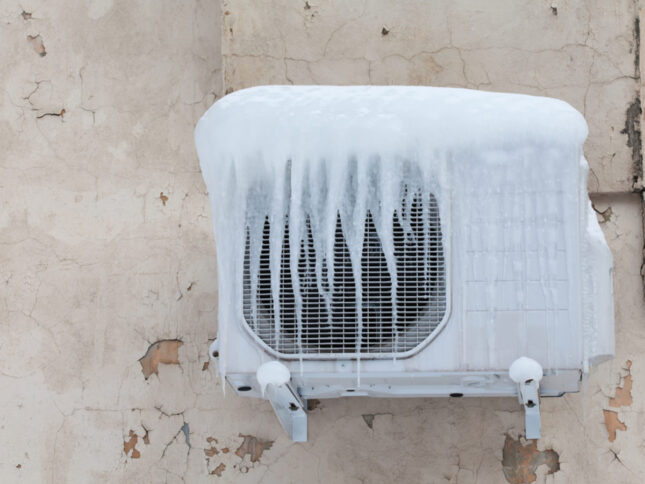
Ice on your air conditioner is never a good sign, even though it feels counterintuitive on a hot day. When your AC unit freezes up, it usually means airflow or refrigerant isn't moving through the system the way it should — and running a frozen system too long can damage the compressor, which is the most expensive part to replace.
At Comfort Pros, this is one of the most common summer calls we get across Brevard and the surrounding WNC mountains. Here's what usually causes it, what you can safely check yourself, and when it's time to call a professional.
In this guide
What Causes an AC Unit to Freeze Up?
An air conditioner freezes when the evaporator coil gets too cold, causing moisture in the air to freeze onto it instead of draining away as condensation. Once ice starts forming, it blocks airflow further, which makes the problem worse. The three most common root causes are:
- Restricted airflow. A dirty air filter, closed vents, or a blocked return air grille all starve the system of the warm air it needs to keep the coil above freezing.
- Low refrigerant. If your system has a refrigerant leak, the remaining refrigerant expands too much and drops the coil temperature below freezing. This one requires a licensed technician — refrigerant work isn't a DIY fix.
- A failing blower fan. If the indoor fan that moves air across the coil is weak, dirty, or not running, warm air isn't reaching the coil fast enough to keep it from icing over.
What You Can Check Yourself
Before assuming the worst, a few quick checks take less than five minutes:
- Check your air filter. Hold it up to a light. If you can't see light through it, it's dirty enough to restrict airflow and needs to be replaced.
- Check your vents. Make sure supply vents throughout the house are open and not blocked by furniture, rugs, or curtains.
- Check your return air grille. This is the larger vent that pulls air back into the system — make sure nothing is stacked in front of it.
- Check your thermostat fan setting. Set it to "auto," not "on." Running the fan constantly on a system that's already struggling can make icing worse.
If you catch the problem early and the ice hasn't fully covered the coil or lines yet, fixing airflow at this stage can sometimes stop it before it gets worse.
How to Safely Thaw a Frozen AC Unit
If your system is already iced over, don't run it. Continuing to run a frozen AC pushes the compressor harder and increases the risk of real damage. Instead:
- Turn the system off completely at the thermostat, but leave the fan running if you have a fan-only setting — this helps move air across the coil to speed up thawing.
- Give it time. A fully frozen coil can take several hours to fully thaw. Don't try to chip or scrape the ice off, since this can damage the coil fins.
- Check for water damage. As the ice melts, it produces a lot of water. Make sure your condensate drain isn't clogged and that the water is draining where it should, not into your ceiling or walls.
When to Call a Professional
Some causes of a frozen AC unit are safe for a homeowner to check and fix, like a dirty filter or a blocked vent. Others aren't. Call a professional if:
- The system re-freezes shortly after thawing and restarting
- You've checked filters, vents, and the return grille and the problem continues
- You hear hissing sounds, which can indicate a refrigerant leak
- The blower fan sounds weak, is making noise, or isn't running at all
Refrigerant leaks and failing blower motors both require diagnostic tools and licensed handling that go beyond a homeowner fix. Our AC repair team can diagnose exactly which of these is causing your system to freeze and get it running safely again. If it turns out your system is older and freezing up is one of several recurring issues, it may also be worth reading about when it makes more sense to replace than repair.
Frequently Asked Questions
Can I run my AC after it thaws to see if it still freezes?
Yes, but keep a close eye on it. If it starts icing again within an hour or two of running, turn it off and call a professional rather than repeating the freeze-thaw cycle, which stresses the compressor.
Is a frozen AC an emergency?
Not usually, as long as you turn the system off and let it thaw. The bigger risk is continuing to run it, which can lead to compressor damage. If you're not sure what's causing it, it's worth scheduling a same-week repair rather than waiting.
Will a frozen AC unit fix itself?
The ice will eventually melt if you turn the system off, but the underlying cause — low refrigerant, poor airflow, or a failing fan — won't fix itself. The problem will likely come back the next time you run the AC unless the root cause is addressed.
How long does it take for a frozen AC to thaw?
Depending on how much ice has built up, it can take anywhere from 1 to 8 hours. Turning off the system and running the fan-only setting speeds this up.
Dealing with a frozen AC unit right now, or want to make sure it doesn't happen again? Our AC repair team serves Brevard and the surrounding Western North Carolina area. Contact us or call to get it diagnosed right the first time.

3 Responses