Furnace Pressure Switch: What It Does, Why It Gets Stuck Open, How to Test It, and What Replacement Costs
A furnace pressure switch is a small safety part that most homeowners only learn about when the furnace stops starting. The fan hums for a minute, nothing lights, and the control board flashes an error code that says the pressure switch is stuck open. Fortunately, the switch itself is often not the real problem, and the true cause is usually something simpler.
This guide explains what the switch does, where to find it, the signs of trouble, the most common causes, how a technician tests it, and what replacement costs in 2026. Comfort Pros diagnoses pressure switch faults across Brevard, Hendersonville, Asheville, and the rest of Western North Carolina every winter, so the details below come from real service calls.
What a Furnace Pressure Switch Does
A gas furnace has to push its exhaust gases outside before it can light safely. A small fan called the inducer does that job. The furnace pressure switch simply proves that the inducer is working and that the vent is clear.
Here is how it works. First, the inducer starts and creates a slight vacuum inside the furnace. Next, a thin rubber hose carries that vacuum to the switch. Then the vacuum pulls on a diaphragm inside the switch and closes an electrical contact. Finally, the control board sees the closed contact and allows the ignitor and gas valve to operate.
Therefore, if the vacuum is too weak, the switch stays open and the furnace refuses to light. That is exactly what it should do. Otherwise, exhaust gases, including carbon monoxide, could spill back into the home.
Where Is the Pressure Switch on a Furnace?
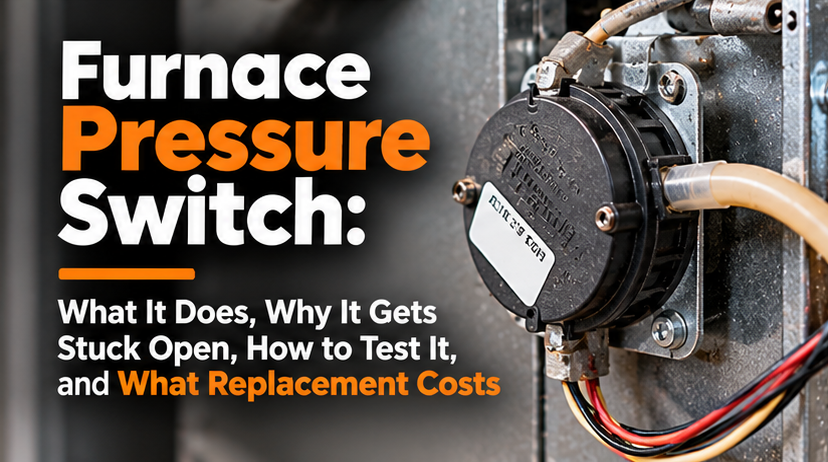
First, turn off the power and remove the upper furnace door. Look near the inducer fan, which is the small round motor attached to the vent pipe. The pressure switch is a round or oval disc about the size of a hockey puck.
It has one or two rubber hoses attached and two or three wires. In addition, high-efficiency furnaces often have two switches, or one switch with two hoses. One hose usually runs to the inducer housing, and the other runs to the condensate collector box.
6 Signs of a Furnace Pressure Switch Problem
Pressure switch faults follow a recognizable pattern. Therefore, watch for these signs.
- The inducer runs but the furnace never lights. You hear a small fan for 30 to 60 seconds, then it stops without any flame.
- The furnace flashes a pressure switch error code. Most control boards have a specific code for a switch that is stuck open or stuck closed.
- The furnace starts and then shuts off mid-cycle. The switch opens while the burners are running, so the heat cuts out.
- The furnace works on some days and not others. Wind, cold, and moisture can push a borderline system over the edge.
- You hear gurgling or see water in the hoses. Water in the hose blocks the vacuum signal.
- The furnace will not start at all. A switch stuck closed stops the sequence before the inducer even runs.
Several of these signs overlap with other faults. For example, a furnace that lights and then shuts down within seconds more often points to the furnace flame sensor. Similarly, a furnace that never lights can point to the furnace ignitor.
Pressure Switch Stuck Open: The Most Common Causes
A code for a furnace pressure switch stuck open means the switch did not close when the inducer started. In most cases, the switch is doing its job and reporting a real airflow problem. Here are the causes our technicians find most often.
A Clogged or Cracked Hose
The rubber hose can crack with age, slip off its fitting, or fill with water or debris. As a result, the vacuum never reaches the switch. This is the simplest fix on the list.
A Blocked Port
The hose connects to a tiny port on the inducer housing or collector box. Over time, rust and scale plug that port. However, a technician can clear it in a few minutes.
A Clogged Condensate Drain
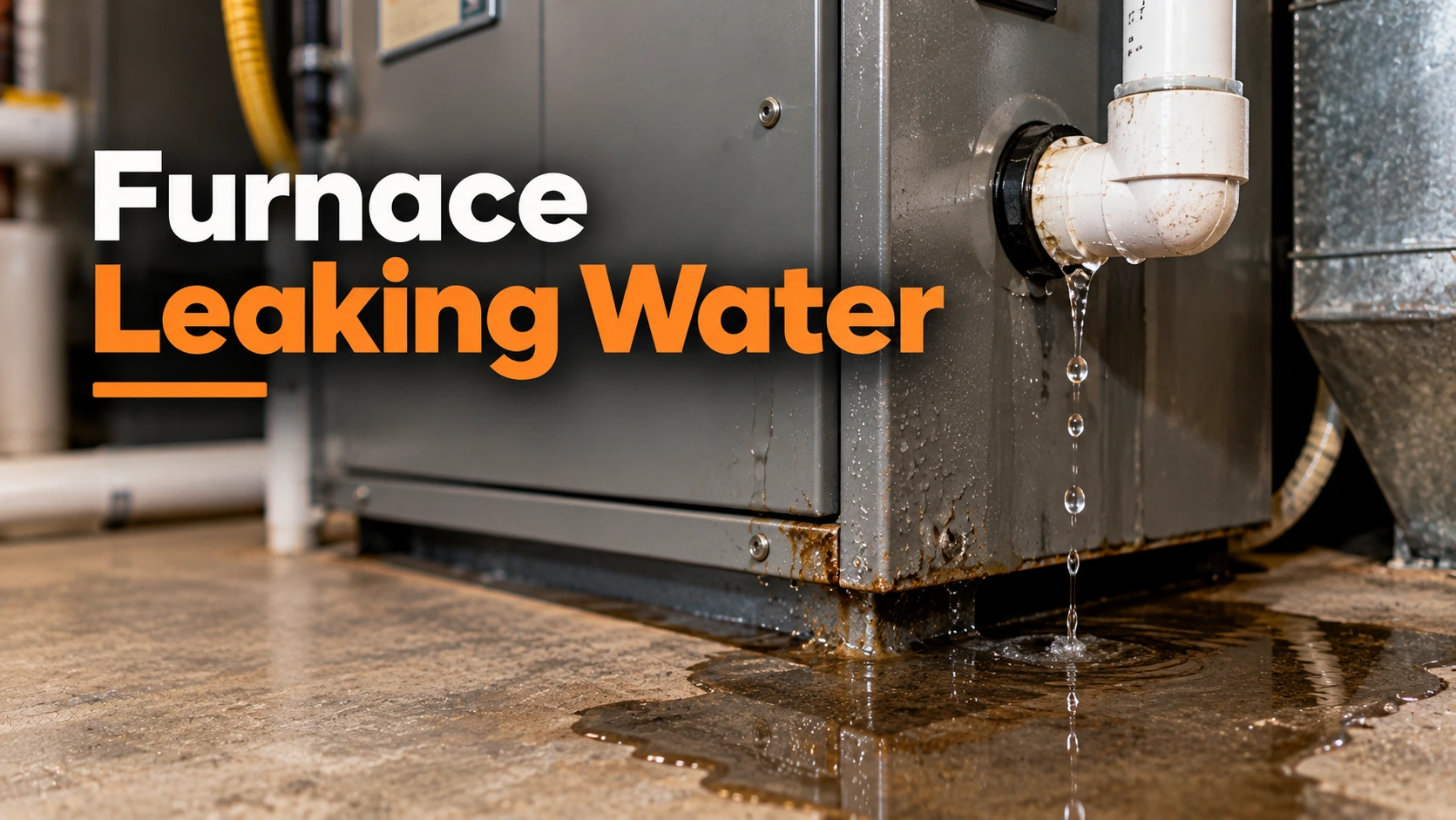
High-efficiency furnaces make water as they run. When the drain or trap clogs, water backs up into the collector box and blocks the pressure signal. In addition, you may notice a puddle near the unit. Our guide to a furnace leaking water covers this in detail.
A Blocked Vent or Intake Pipe
Leaves, bird nests, wasp nests, snow, and ice can block the pipes outside. Therefore, check the vent terminations on the outside wall or roof after storms. This is common in wooded mountain areas across Western North Carolina.
A Weak Inducer Motor
An inducer that spins too slowly cannot create enough vacuum. Worn bearings, a damaged wheel, or a failing capacitor can each cause this. See our guide to the furnace inducer motor for the warning signs.
A Failed Switch
Finally, the switch itself can fail. The diaphragm inside stiffens or tears after years of use. However, this is the least common cause, which is why replacing the switch first often wastes money.
Notice the order of that list. Five of the six causes have nothing to do with the switch itself. Therefore, a good technician checks the hose, the port, the drain, the vent, and the inducer before pricing a new part.
Pressure Switch Stuck Closed
A stuck closed code is less common. Before the inducer starts, the control board checks that the switch is open. If the switch is already closed, the board assumes something is wrong and stops.
Usually, the cause is a failed switch with welded contacts, a wiring fault, or a jumper that someone left in place. Occasionally, a control board fault is to blame.
How to Test a Furnace Pressure Switch
A homeowner can safely do a visual check. First, turn the power off. Next, look at the hose for cracks, kinks, or water. Then confirm that both ends fit tightly. Finally, check the vent pipes outside for anything blocking them.
A technician goes further. First, a multimeter confirms whether the switch closes when the inducer runs. Next, a manometer measures the actual vacuum in the hose. Each switch has a rating printed on its label, such as negative 0.60 inches of water column. Therefore, if the vacuum is below that number, the switch is fine and the airflow is the problem. However, if the vacuum is strong and the switch still stays open, the switch has failed.
That second step is what separates a correct repair from a guess. Our system diagnostics visit includes this measurement.
Never Bypass a Furnace Pressure Switch
Some online videos show how to jump the two wires together to make the furnace run. Do not do this. The switch exists to stop the furnace when exhaust cannot leave the home safely. Consequently, bypassing it can allow carbon monoxide to build up indoors.
The Consumer Product Safety Commission explains the risks in its carbon monoxide information center. In addition, every home with a gas furnace should have working carbon monoxide alarms on each level.
Furnace Pressure Switch Replacement Cost
When the switch truly has failed, replacement is a modest repair. Typical ranges in 2026 look like this:
- Pressure switch, part only: $20 to $100
- Professional replacement, installed: $150 to $350
- Hose replacement or port cleaning: $100 to $200
- Condensate drain clearing: $100 to $250
The switch must match the furnace exactly. A switch with the wrong pressure rating may let the furnace run in unsafe conditions, or it may never close at all. At Comfort Pros, the visit starts with a flat $125 diagnostic, and we waive that fee when we complete the repair.
How to Prevent Pressure Switch Problems
Most pressure switch faults come from dirt, water, and blocked vents. Therefore, a few habits prevent the majority of them.
- First, keep the outdoor vent and intake pipes clear of leaves, snow, and nests.
- Second, change the air filter on schedule.
- Third, have the condensate drain and trap cleaned every fall.
- Finally, schedule a yearly tune-up before heating season.
During HVAC maintenance, a technician checks the hoses, clears the ports, and measures the vacuum. Our plan is $199 per year per system, and we explain whether a maintenance plan is worth it in a separate guide.
Frequently Asked Questions About a Furnace Pressure Switch
What does a furnace pressure switch do?
It confirms that the inducer fan is moving exhaust gases out of the furnace before the burners light. If the switch does not sense enough vacuum, it keeps the furnace from starting.
What causes a furnace pressure switch to stay open?
The most common causes are a cracked or clogged hose, a blocked port, a clogged condensate drain, a blocked vent pipe, or a weak inducer motor. However, a failed switch is the least likely cause.
Can I replace a furnace pressure switch myself?
The part is simple to swap, but the diagnosis is not. In most cases, the switch is not the faulty part. Therefore, without a vacuum measurement, a new switch often leaves the same error code in place.
How long does a furnace pressure switch last?
Most switches last 10 years or more. Many last the life of the furnace. However, moisture and corrosion shorten that lifespan.
Can a dirty filter cause a pressure switch error?
Not directly, because the filter is on the air side and the switch is on the exhaust side. However, a dirty filter causes overheating and other shutdowns that look similar. For example, see why a furnace keeps turning on and off.
Is it safe to run a furnace with a bad pressure switch?
The furnace will not run with a switch that is stuck open, and you should never bypass it. Instead, leave the furnace off and schedule a repair.
Pressure Switch Error Code? We Can Help
A pressure switch fault is usually a fast fix once someone finds the real cause. Comfort Pros provides heating repair across Brevard, Hendersonville, Asheville, and the surrounding mountain communities, Monday to Friday 8:00am - 5:00pm, with a flat $125 diagnostic that we waive when we complete the repair.
Contact us or call (828) 393-0024, and we will measure the vacuum, find the cause, and get your furnace lighting again.
Related Post